Zingiber officinale

Ginger

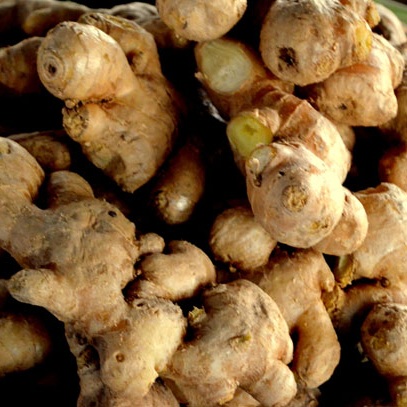
Known worldwide for its rhizome with a fresh, lemony, and spicy flavor, ginger is a tropical plant that has been cultivated as a spice for centuries. Beneath its slender foliage hides the most sought-after part of the plant: a fleshy and highly aromatic rhizome.
Visible au jardin
Nom scientifique :
Zingiber officinale
Nom vernaculaire :
Ginger
Carte d’identité
de l’espèce
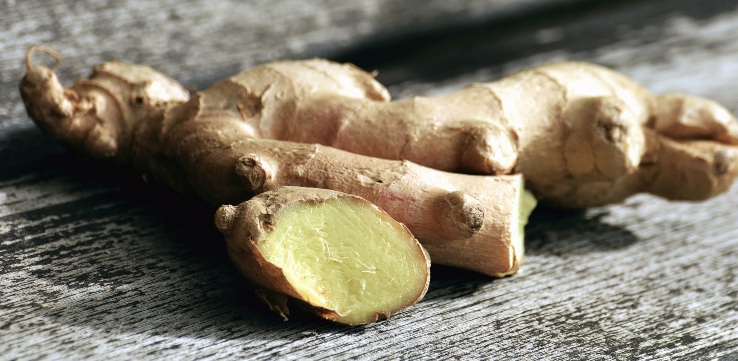
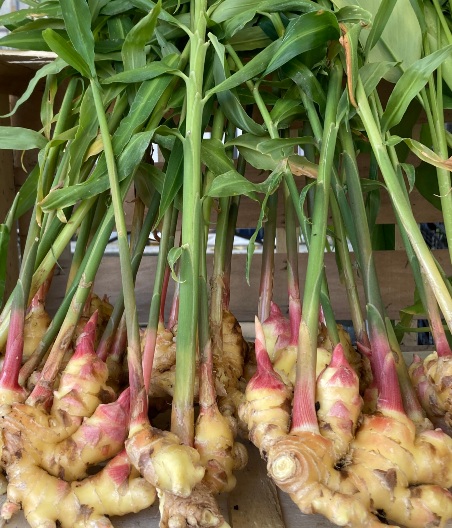
Ginger is a perennial herbaceous plant that grows from a thick, branched underground rhizome. Its long, narrow leaves are supported by pseudostems formed by the overlapping of their sheaths. Contrary to what its appearance might suggest, the part consumed is not a root, but an underground stem.
Famille :
Zingiberaceae
Origine géographique :
Asia, from the eastern Himalayas to south-central China
Taille :
60 to 120 cm
Floraison :
August to November
Habitat :
Warm and humid tropical environments, preferably partially shaded
Classe :
Liliopsida (Monocots)
Ordre :
Zingiberales

Ginger, a rhizome that has become an essential spice

Ginger (Zingiber officinale) is one of the most well-known tropical spices. The plant develops a thick, branched rhizome underground, recognizable by its pale yellow flesh and powerful aroma. Consumed fresh, dried, powdered, or processed, it adds a flavor that is both spicy and lemony to dishes.

Long present in Asian cuisines, ginger has gradually spread to many tropical regions. Today, it is also grown in the Caribbean, where it finds the warm and humid conditions favorable to its growth.

In the West Indies, ginger is prized in cooking for seasoning dishes, marinades, sauces, and desserts, as well as for flavoring drinks and infusions. It is also among the plants traditionally used for their medicinal properties, particularly in preparations intended for digestive comfort. Ginger is especially studied for its effectiveness against certain forms of nausea.

Beyond its rhizome, Zingiber officinale has discreet yet striking flowers. The blooms appear on shoots separate from the leafy stems and are clustered into compact spikes.

At the Jardin de Valombreuse, ginger also offers a chance to explore the diversity of the Zingiberaceaefamily. It is related to theshell ginger, a staple of Caribbean traditions, as well as the spectacular torch ginger. This botanical family brings together plants cultivated for their rhizomes, traditional uses, or remarkable blooms.

Découvrez nos autres espèces botaniques
Turmeric
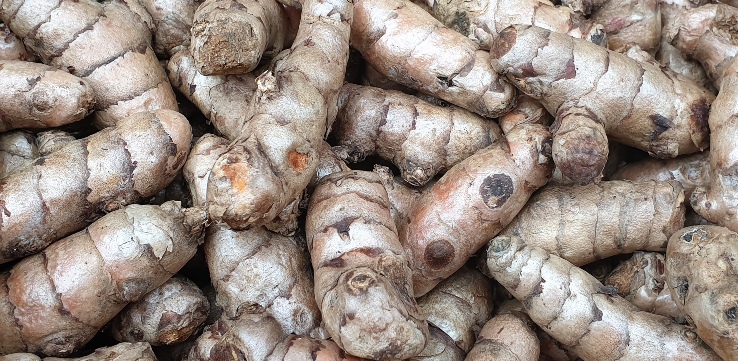
Known for the intense yellow color of its rhizome, turmeric is an aromatic tropical plant from the same family as ginger. Used as a spice and natural coloring agent, it also produces lush foliage and particularly decorative inflorescences.
Découvrir l’espèce
Ceylon Cinnamon
Ceylan Cinnamon is one of the oldest and most recognizable spices in the world. But before it becomes the fragrant sticks in our kitchens, it is the bark of a tropical tree: the cinnamon tree, cultivated for the powerful aromas contained within its young branches.
Découvrir l’espèce
Basil
Highly prized for the intense fragrance of its leaves, basil is an aromatic plant grown in many tropical regions. In Guadeloupe, it grows year-round and comes in several varieties with sometimes surprising aromas, ranging from traditional sweet basil to lemon or cinnamon basil.
Découvrir l’espèce